
The Anti-Virality Playbook: Writing for Reputation, Not Reach

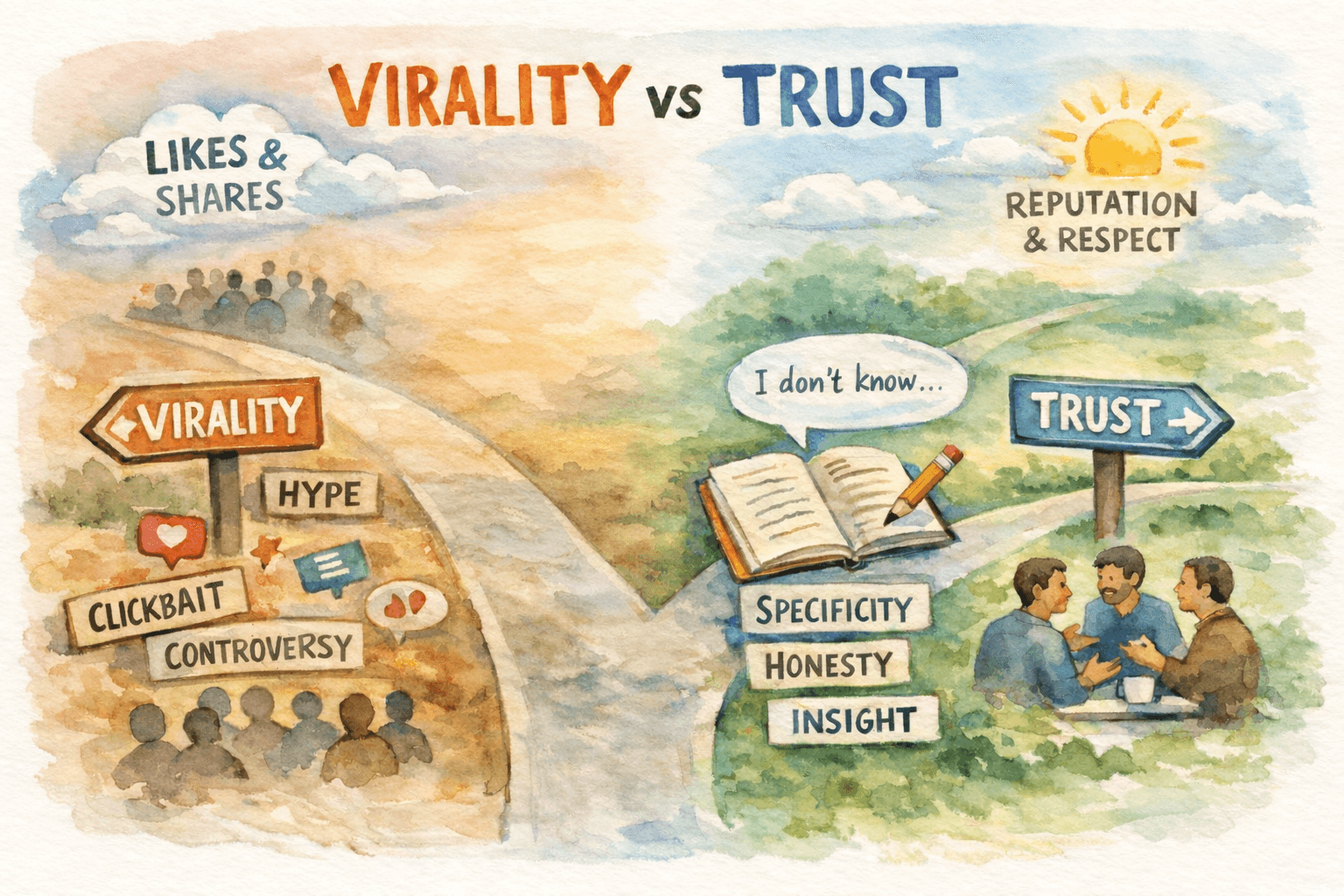
Virality and trust diverge. Posts designed to go viral often sacrifice accuracy, nuance, or authenticity for reach. The anti-virality playbook is about writing for reputation over reach: specificity, humility, and sharing how you reason, not just your conclusions.
Writing for peers, not algorithms
Algorithm-optimized posts use engagement bait: controversial takes, clickbait headlines, or vague claims that generate comments. Posts written for peers use specificity: concrete examples, clear reasoning, and honest uncertainty. The second builds trust; the first builds followers who don't actually care.
Specificity over broad appeal: a post that helps 100 engineers deeply is more valuable than a post that entertains 10,000 people shallowly. Write for the audience that matters, not the algorithm.
Saying "I don't know" publicly
Confidence gets engagement, but uncertainty builds trust. When you don't know something, say so. When you're extrapolating from limited experience, acknowledge it. When there are multiple valid perspectives, include them. That honesty is what makes readers trust your judgment.
Avoiding engagement bait: don't ask "what do you think?" just to get comments. Don't use controversial language just to generate debate. Write because you have something to say, not because you want engagement.
Long-form thinking in short posts
You don't need long posts to show deep thinking. A short post that walks through your reasoning process is more valuable than a long post full of fluff. Focus on the thinking, not the word count.
Measuring success differently: instead of tracking likes and shares, track whether people you respect engage thoughtfully. Track whether your posts help people make better decisions. Track whether you're building a reputation as someone with useful insights.
Reputation compounding over time
When virality hurts credibility: a viral post that's wrong or misleading can damage your reputation more than a small post that's accurate and helpful. Reputation compounds slowly through consistent, high-quality content. One viral post doesn't build trust; dozens of solid posts do. That's the anti-virality playbook: write for the long term, not for the algorithm.